Green Infrastructure, Agroecological Practices and Biodiversity in Olive Orchards (GIolive)
23 - 26 November 2026 | Heraklion, Crete, Greece


Green Infrastructure, Agroecological Practices and Biodiversity in Olive Orchards (GiOlive)
23 - 26 November 2026 | Heraklion, Crete, Greece
Abstract Submission Deadline
10 October 2026
Abstract Acceptance Notification
20 October 2026
Early Bird Registration Deadline
31 October 2026
Covering Author Registration Deadline
10 November 2026
Registration Deadline
10 November 2026
Welcome from the Organizers
Dear Colleagues,
We are pleased to announce the international conference “Green Infrastructure, Agroecological Practices and Biodiversity in Olive Orchards”, which will take place from 23 to 26 November 2026 at the Hellenic Mediterranean University in Heraklion, Crete, Greece.
GiOlive Conference is organized by the Laboratory of Olive, Vine and Agroecological Production Systems (LOVAPS) of the Hellenic Mediterranean University (HMU) under the auspices of Crete Region.
The conference is conducted within the framework of the LIFE IGIC project https://www.lifeigic.eu/en/
Green Infrastructures (GI) include both natural and artificial elements, such as aromatic, medicinal, and fruit plants, as well as water ponds, stone piles, and branch piles that function as refuges and their implementation is an effective management strategy for enhancing habitat heterogeneity and promoting biodiversity and agroecosystem services. Meanwhile, agroecological and sustainable cultivation practices constitute a key component of GI in olive orchards and are essential for its effective application, particularly considering the impacts of climate change in recent years.
The conference aims to bring together academics, researchers, experts, professionals, policymakers, and students working in the fields of biodiversity, flora and fauna, Mediterranean agroecosystems, green infrastructure in rural areas and landscapes, landscape level habitat connectivity, agroecology, and olive cultivation.
Its objective is to promote knowledge exchange and foster constructive dialogue on current challenges and future perspectives related to these thematic areas.
Both oral and poster presentations are welcome.
Sessions at the conference include:
- Mediterranean Agroecosystems
- Green Infrastructure and Connectivity
- Agroecological Practices Supporting Green Infrastructure and Biodiversity
- Olive Orchard Biodiversity and Ecosystem Services
- Oleotourism and Gastronomy
- Policies for Green Infrastructure and High Nature Value Orchards
We kindly ask you to save the dates and share this event with colleagues who may be interested.
We look forward to welcoming you in Heraklion in November 2026!
For abstract submission or further information, please contact us at: giolive@hmu.gr
Scientific Committee

Dr. Chartzoulakis Kostas
Former Researcher and Head of Institute of Olive Tree, Subtropical Crops and Viticulture
Prof. Antonio Jose Manzaneda Avila
Prof. University of Jaen
Dr. Vasileios Gkisakis
Researcher B', Olive Oil Laboratory - Kalamata, Institute of Olive Tree, Subtropical Crops and Viticulture
Dr. Georgios Psarras
Researcher A', Plant Physiology & Mineral Nutrition - Chania, Institute of Olive Tree, Subtropical Crops and Viticulture
Dr. Nikolaos Volakakis
Post Doc Researcher, Department of Agriculture, Hellenic Mediterranean University
Dr. Georgia Tanou
Researcher A', HAO DEMETER, THESSALONIKI
Dr. Dimitris Poursanidis
Institute of Applied and Computational Mathematics, Foundation of Research and Technology-Hellas.
Prof. Apostolos Kiritsakis
Emeritus Professor of Olive Oil of International Hellenic University, International Observatory of Oxidative Stress in Agrifood and Health, AOCS FELLOW
Prof. Stavros Vemos
Professor, Department of Crop Science, Agricultural University of Athens
Prof. Ioannis Vogiatzakis
Professor, Department of Soil, Plant and Food Sciences, University of Bari
Asst. Prof. Tassos Kyriakides
Assistant Professor of Biostatistics, Yale Institute for Global Health
Assoc. Prof. Emmanouil Kabourakis
Associate Professor, Department of Agriculture, Hellenic Mediterranean University
Asst. Prof. Chrysanthi Polychroniadou
Assistant Professor, Department of Agriculture, Hellenic Mediterranean University
Dr. Giorgos Stavrianakis
Researcher University of Aegean
Prof. Athanassios Molassiotis
Professor, School of Agriculture, Aristotle University of Thessaloniki
Asst. Prof. Michail Michailidis
Assistant Professor, School of Agriculture, Aristotle University of Thessaloniki
Prof. Petros Roussos
Professor, Department of Crop Science, Agricultural University of Athens
Prof. Georgios Nanos
Professor, Department of Agriculture Crop Production and Rural Environment, University of Thessaly
Asst. Prof. Evangelos Karagiannis
Assistant Professor, Department of Agriculture, University of Western Macedonia
Sessions
S1. Mediterranean Agroecosystems
Mediterranean agroecosystems are among the most complex and historically shaped agricultural landscapes worldwide, having evolved through the long-term interaction between natural and anthropogenic factors. This section presents research findings on the distinct characteristics of Mediterranean ecosystems and their development, under pressures such as agricultural intensification, land abandonment, climate change, and resource depletion. Additionally, this section highlights traditional practices that contribute to landscape heterogeneity and ecological resilience. Ultimately, it emphasizes the importance of integrated approaches that combine traditional knowledge with modern agroecological practices, to enhance resilience and ensure long-term environmental and production sustainability.
S2. Green Infrastructure and Connectivity
The implementation of Green Infrastructure (GI) has been proposed as an effective management strategy for enhancing habitat heterogeneity and promoting biodiversity and agroecosystem services. This section addresses the various aspects related to GI and its role in habitat connectivity. In olive groves, GI includes both natural and artificial elements, such as aromatic, medicinal, and fruit plants, as well as water ponds, stone piles, and branch piles that function as refuges. Furthermore, GI encompasses the application of sustainable agroecological farming practices related to optimal canopy management, agroecological soil, nutrient, fertilizer, and irrigation water management, as well as plant protection strategies. GI elements, combined with the implementation of agroecological and sustainable agricultural practices, support biodiversity, enhance ecosystem services, and reduce habitat fragmentation. The application of GI in olive groves protects biodiversity and natural resources, strengthens reslilince to climate change, improves environmental performance, and supports the provision of multiple agroecosystem services. Finally, GI enhances ecological connectivity between agricultural land and neighboring natural areas, such as NATURA 2000 sites. This connectivity facilitates species movement and dispersal.
S3. Agroecological Practices Supporting Green Infrastructure and Biodiversity
The implementation of agroecological and sustainable cultivation practices constitutes a key component of Green Infrastructure (GI) in olive groves and is essential for its effective application. This section covers key cultivation practices that support GI and biodiversity while boosting olive tree growth and orchard productivity, biodiversity, landscape quality, and natural resources. These practices include: (a) management of olive tree canopies and pruning residues, (b) soil and vegetation management, (c) agroecological nutrient and fertilizer management, (d) agroecological management of water resources and irrigation water, and (e) agroecological plant protection strategies.
S4. Olive Orchard Biodiversity and Ecosystem Services
Green Infrastructure (GI) provides numerous benefits for agroecosystems, the environment, and human well-being, collectively known as agroecosystem services. Specifically, GI contributes to biodiversity conservation, improves soil fertility and health, reduces erosion and nutrient leaching, regulates populations of olive tree pests, and decreases water pollution. This section addresses agroecosystem services associated with GI and their role in supporting regional biodiversity. Additional, emphasis is placed on how the GI drives important biological processes, such as nitrogen fixation and decomposition, which simultaneously reduces cultivation costs and elevates the environmental value of olive orchards. By creating habitats for various species, GI supports biodiversity conservation, natural pest control, and pollination.
S5. Oleotourism and Gastronomy
Oleotourism represents a contemporary and rapidly growing form of sustainable tourism that connects olive growing and production, gastronomy, and cultural heritage, with a focus on olive cultivation and the production of olive-based products. Particularly in Mediterranean regions, where olive cultivation constitutes a key element of biodiversity, rural landscapes, local identity and economy, oleotourism can serve as a valuable tool for rural development and tourism product diversification. This section presents oleotourism activities that offer experiential learning opportunities, while highlighting the ecological, social, economic, and cultural value of olive cultivation, as well as its contribution to the conservation of natural resources (soil, air, and water) and biodiversity. Furthermore, since olive products are a fundamental component of the Mediterranean diet and are associated with significant health benefits, the relationship between oleotourism and gastronomy is also emphasized. Attention will be given to the designation of Crete as the European Region of Gastronomy for 2026, an achievement that internationally recognizes the close connection between local gastronomy and the natural environment.
S6. Policies for Green Infrastructure and High Nature Value Orchards
Institutional and policy frameworks play a crucial role in promoting Green Infrastructure (GI) and conserving High Nature Value (HNV) olive groves, particularly in Mediterranean regions, where traditional agricultural systems are closely linked to biodiversity conservation and the preservation of cultural heritage. This sesion examines the characteristics of HNV olive groves and the benefits arising from their contribution to soil health protection, habitat conservation, and the enhancement of ecological connectivity. In addition, it refers to European Union and Common Agricultural Policy (CAP) strategies that support GI and HNV farming systems through agri-environmental measures and financial incentives, as well as to biodiversity, landscape structure, and ecosystem service indicators used to monitor and assess the effectiveness of these strategies. The implementation of financial support mechanisms is considered essential for ensuring the long-term sustainability and to prevent HNV and traditional olive orchards abandonment.
Instructions for Authors
Abstract Submission
Green infrastructure, agroecological practices and biodiversity in olive orchards (GIolive) accepts abstract submissions only. Accepted abstracts will be available online during and after the conference.
The conference will be held entirely in person; online participate will not possible. Please note that abstract submission and conference registration are two separate processes. Please use your institutional email address for both processes.
To present your research at the event
-
- SEND YOUR ABSTRACT at this email: giolive@hmu.gr.
- Choose a session that best suits your research.
- Submit an abstract in English. The abstract must be between 250 and 300 words.
- The deadline to submit your abstract is 10 October 2026.
- Upon submission, you can select if you wish to be considered for oral or poster presentation. Following evaluation by the Session Chairs and the Scientific Committee, you will be notified by 20 October 2026 whether your contribution has been accepted.
- Please note that, in order to finalize the scientific program in due time, at least one author must registrated as Covering Author, to cover the presentation and publication of any accepted abstract. The Covering Author registration deadline is 10 November 2026. Abstracts will be withdrawn if registration is not completed by this date.
- Abstract's structure should include the introduction, methods, results, and conclusions sections.
- All abstracts accepted for presentation will be collected in a Book of Abstracts, which will be made available on the conference website during the event.
Oral presentations
-
- Authors are encouraged to prepare their presentations using PowerPoint or similar software.
- Please note that all presentations must be delivered in English.
Poster presentations
-
- Each presenter will be provided with a vertical poster board.
- The Maximum poster size is limited to A0: 84 x 120 cm / 33 x 47 in (width x height) in the vertical orientation (portrait).
- Please print your poster prior to the conference.
Registration
In-Person Registration
The conference will be held fully in person; there is no option for online participation. The registration fee includes attendance at all conference sessions, morning/ afternoon coffee breaks, a conference bag and a program book. Participation in the conference is considered final only once the registration fees have been paid.
Important Information
Abstract Submission vs. Registration: Please note that abstract submission and conference registration are two separate/different processes. When registering, please use the same email address that you used to submit your abstract(s). Otherwise, leave us a comment in the registration form, specifying the email address used during the submission process.
Covering Author Requirement: In order to finalize the scientific program on time, at least one author per accepted abstract must register for the conference to cover its presentation and publication. This individual is denoted as the Covering Author.
Deadline: The Covering Author registration deadline is 10 November 2026. Your abstract will be automatically withdrawn if your registration is not completed by this date.
Certificates: Attendees can request an electronic Certificate of Attendance after the event by emailing the conference secretariat at the address polychroniadou@hmu.gr.
| Early Bird Until 31 October 2026 |
Regular Until 10 November 2026 |
|
|---|---|---|
| Participants | 100.00 EUR | 120.00 EUR |
| Student | 40.00 EUR | 60.00 EUR |
Field trip: Cost will be determined based on the number of participants.
Conference dinner: Cost will be determined based on the number of participants.
To proceed with your registration, please click the link.
Sponsorship Opportunities
As organizers, we are excited to create an immersive and insightful conference, and we invite you to be a valued and vital part of GIolive2026.
Every sponsorship includes:
-
- Your company’s logo featured on the conference website, book of abstracts, and program.
- The opportunity to distributie your company’s promotional items.
If you have any questions, feel free to contact us via email at polychroniadou@hmu.gr.
Venue, Travel and Accommodation
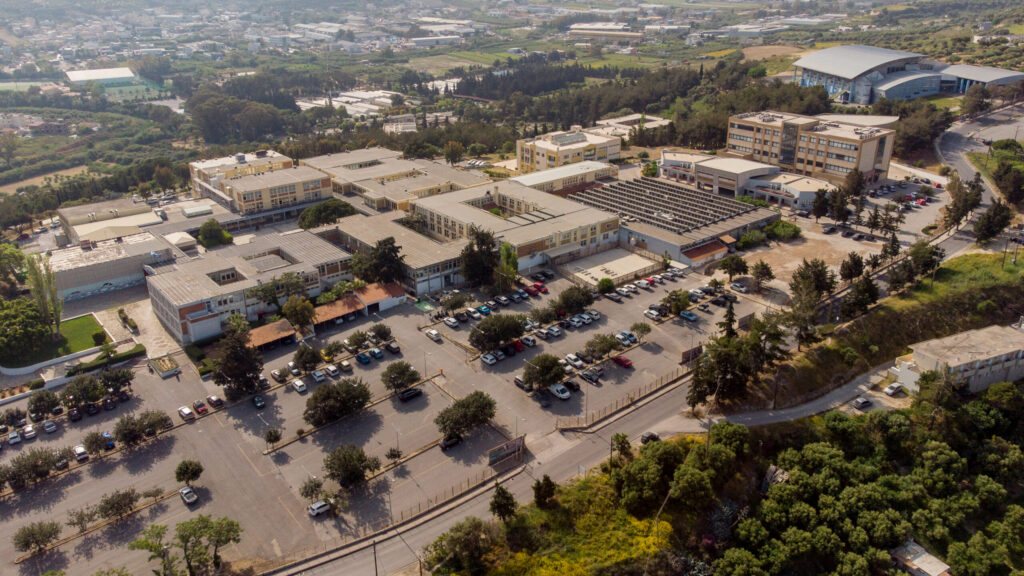
HMU, Hellenic Mediterranean University
About the venue
The Department of Agriculture belongs to the School of Agricultural Sciences of the Hellenic Mediterranean University (HMU). It was established by Law 4610/2019, and its academic operation began in the fall semester of the academic year 2019-2020. The Department’s goal is to provide quality education to undergraduate students in key branches of Agricultural Science through its new 5-year Undergraduate Program (Bachelor’s) and relevant majors, as well as through its independent Master’s Degree Program. The Department has also offered doctorate (Ph.D.) degree programs both independent as well as in collaboration with other Universities since October 2019.
You can find useful information for the Department Agriculture on the website https://agro.hmu.gr.
Laboratory of Olive, Vine and Agroecological Production Systems
The Laboratory of Olive, Vine and Agroecological Production Systems (LOVAPS ) of the Department of Agriculture within the School of Agricultural Sciences at the Hellenic Mediterranean University serves the academic, research, educational, advisory, and training needs related to olive production, viticulture, and pomology.
The purpose of the Laboratory is to meet the Department's research and teaching needs at all levels (undergraduate, graduate, doctoral, and postdoctoral) and to support the olive and vine production sectors, which are significant from agroecological, economic, and social perspectives. Specifically, the Laboratory focuses on olive production, viticulture, and organic agriculture through the advancement of agroecological science and the provision of high-level research in agroecology, sustainable agriculture, viticulture, olive production, and the production of other Mediterranean tree crops.
Conference Location
-
- Rooms: Amfitheatro and Room Δ of School of Health Sciences
- Address: Estavromenos, 71410 Heraklion, Crete, Greece
Travel
You can reach Heraklion by plane. Heraklion Airport Nikos Kazantzakis is located 2 kilometers from the center of Heraklion, in the Nea Alikarnassos Community.
For more information please visit the website https://www.heraklion-airport.info/.
Airport Transfers
-
- By bus: The bus station id located outside the airport grounds on the central rode. Buses arrive very frequently and you can choose from the lines 5, 6, 10, 12, 15 depending on your final destination.
For more information please visit the website https://astiko-irakleiou.gr/en/. - By taxi: Taxis are available outside the arrivals area. A trip to the city center takes about 15 minutes.
- By bus: The bus station id located outside the airport grounds on the central rode. Buses arrive very frequently and you can choose from the lines 5, 6, 10, 12, 15 depending on your final destination.
Reaching the Conference Venue
-
- By bus: You can use lines 1 and 7 to reach Hellenic Mediterranean University (ΕΛ.ΜΕ.ΠΑ.) and also go back to the city center.
- By taxi: Taxis offer a convenient door-to-door option from the city center to the conference venue.
Accommodation
We want your stay in Heraklion during the conference to be as comfortable as possible.
Please book your accommodation online or contact the hotels directly with any issues or requests related to accommodation bookings. In addition, numerous apartments and short-term rental properties are available throughout the city of Heraklion.
Here are some hotel recommendations:
| Hotel | Indicative Price Per Day (breakfast included) | Website |
| Kastro Hotel | 58,00 € | Link |
| Iraklion Hotel | 60,00 € | Link |
| Hotel Atrion | 63,00 € | Link |
| Marin Hotel | 75,00 € | Link |
| Lato Hotel | 85,00 € | Link |
| Hotel Olympic Heraklion | 90,00 € | Link |
| Artion City Boutique Hotel | 90,00 € | Link |
| Olive Green Hotel | 93,00 € | Link |
| Aquila Atlantis Hotel | 94,00 € | Link |
| Legacy Gastro Suites | 99,00 € | Link |
| Capsis Astoria Heraklion | 100,00 € | Link |
| Metropole Urban Hotel | 118,00 € | Link |
| Galaxy Hotel | 120,00 € | Link |
| Ibis Hotel | 124,00 € | Link |
| DOM Boutique Hotel | 157,00 € | Link |
| GDM Megaron Hotel | 200,00 € | Link |